Mozilla lost the tech race and with it a lot of users. Firing a lot of their talented developers didn't help. Now Mozilla is giving up the only reason why they kept a core audience of privacy focused users by sending our browsing data to third party servers for inference just at the time when small local models are getting good enough for many/most use cases like summarization or translation. Chrome provides an API for local LLMs. Apple is trying to run as much interference locally as possible. Mozilla is worse than that. Claiming private browsing while sending data to third parties.
I don't care what their data retention policies are, I don't want my data to be sent to others full stop.
Private means it's mine, it's under my control. Handing it to third parties is not private.
I can wholeheartedly recommend Sean Carroll's Mindscape podcast if you want to listen to interesting topics related to Physics, Philosophy, Quantum Mechanics and Science in general: https://www.youtube.com/@seancarroll/videos
He has a talent for explaining complex topics in easy to understand terms and avoids the trap of outrage and controversy driven social media tricks like some others in the field.
That's simply not true. I've spent hundreds of hours listening to his AMAs and he's remarkably good at taking questions that might be confused or poorly worded and respectfully answering the best interpretation of what the person asked.
He does have an approach to certain questions to say that it's the wrong question to ask. For example, to "why does the universe exist?" he would say that the question presupposes that everything needs an explanation for why it exists, and the universe is not that kind of thing. This is actually super common in philosophy, but I could see it coming across as pompous to someone who had never heard an answer like that before. He's not saying that the question is stupid, he's saying that it literally doesn't have an answer.
That is really interesting. To me he does sound very pompous. I still like him, but he treats most questions like the person should be ashamed of having asked something so foolish.
Different interpretations of the same personality I suppose.
I don't have a great sample size but I've never thought he was being dismissive or implying something was a stupid question or someone should be ashamed of asking. However I do still think he sounds pompous, purely as a matter of the way he speaks. It's the pace, the cadence, and how he hangs on or stresses certain syllables and words. It's a recognizable style, not unique to him. Leonard Susskind has a similar one, though I'd say not as extreme. You get a more extreme form listening to various philosophers. (An example as parody here: https://www.youtube.com/watch?v=leQ1bczMu7c) It usually doesn't bother me, as I can filter out the information from the presentation, but I still notice something. Reading is better than listening in part for not needing that layer of filtering.
It was really good through the pandemic and then he got a bit caught up in discussing politics, when I was just there for the quantum physics. (Was around the time after he picked up his new physics/philosophy position and moved towns)
He was very influential in pushing me to favour Many Worlds over Copenhagen, and his interviews with people like David Deutsch were gold. Might have to check out what he's doing these days.
I'll add that it's my favorite podcast to listen to while falling asleep - if you do that with podcasts. Sean uses high quality audio gear (and he ships/loans similar to his guests), so the audio is almost always top notch. He also must do what I would consider to be the bare minimum of editing to normalize volumes.
So many podcasts are unlistenable to me for bedtime, because of mismatched volume levels of host/guest or poor quality audio for the guest (through zoom or whatever). He also tends to speak in a smooth tone, with obvious inflection for emphasis (i.e. not monotone), but not irritatingly chipper or fake sounding like some other physics podcasters.
one of my biggest pet peeves is podcasts/youtube videos that would be perfect to listen to while resting, if not for some loud and obnoxious intro/outro music. Or a too-loud background muzak track. If I want muzak I'll go to the supermarket or stand in an elevator.
Seconded. I truly consider that podcast a gem of our culture. I know of no comparable resource for generally curious people willing to try and think deeply about things.
In all honesty I think this is an unfair characterization. I've listened to his podcast for a fair number of years and I think you're exaggerating quite a bit.
Mostly the episodes are specific topics with a guest who's area of research/specialty is the topic and which stay pretty well on-topic.
Most of the AMA episodes are in the area's where Carroll specialize: physics and philosophy of science. It -occasionally- veers off into politics or basketball, but it's nowhere close to 51% politics and basketball. I think the most recent AMA did have more basketball than usual, and admittedly more than I like. And I am not a fan of his politics nor do I consider his political positions especially thoughtful or insightful. But those diversions are more occasional distractions than some majority of the AMA content. And in a 3+ hour Q&A format its not surprising that he's asked about those areas where his regular listeners know that he has a particular interest or position.
Came here to say exactly this. Mindscape is great, with lots of interesting guests and topics. And new episodes come fairly frequently, 1-2 a month i think
He actually publishes a new episode every Monday! Once a month he publishes a special AMA episode which covers a lot of listener (Patreon subscribers) questions and usually is 3-4 hours long! I'm always looking forward to these especially :)
Thank you! I will never click on a you tube link without a solid prior recommendation. I really appreciate "complex topics in easy to understand terms" and look forward to checking this out.
I know consumers hate the situation with ram and storage prices right now, as do I. But at least on the bright side all this AI investment has unlocked a lot of progress in a space that didn't see huge advancements in a good while. All these 10-20% improvements gen-on-gen have resulted in upgrade cycles of well over 5 years for many use cases in order to really feel like it's worth it. RAM capacities especially have felt near stagnant for a decade.
The benchmark is very rudimentary. It does not test different levels/settings apart from its own -b 256/512 (does it affect decompression?), it doesn't measure compression time and memory usage. It does not specify parallel vs single-threaded (it mentions parallel on the one decoding number but what about the others?).
The lrzip test is interesting but it omits for example zstd and doesn't even have (de-)compression timings.
A lot more numbers are needed to present a fair and informative comparison.
I don't want this to be a swipe against bzip3, I only want to point out the presented benchmarks could be a lot better.
Debit cards can do chargebacks just as credit cards can do. That's a feature of Visa and Mastercard (and others). If your bank refuses, complain to the card network. Oh and consider changing banks, that's really unacceptable in 2026 and shows an anti customer stance.
This is completely normal. You can't just issue a chargeback because you feel like you want your money back after the fact. They want to know what went wrong. It could be fraud but it could be also misleading checkout experience and other reasons. The merchant is charged often a fee for a chargeback on the order of $15 and it might result in penalties.
So, if you feel like you've been charged unfairly (e.g. product not what was expected), in error, fraudulently etc. then chargeback is the route and you should provide a reason. It's a mechanism to protect consumers. If on the other hand you just want your money back without good reason then chargebacks are not the right tool. The consumer also has an obligation to pay if there was no fault on the merchant side.
Honestly, sounds like everything is as it should be?
In both US and EU, chargebacks are a general consumer protection tool, implemented by card networks to make you less afraid of using them with potentially-untrustworthy merchants, even when not legally required.
They can be used for any kind of legitimate grievance, outright fraud being just one of them. If you book a hotel and the room is not up to the standards on their website, take pictures, take screenshots and chargeback.
They are not, however, a way to cancel a subscription you decide you no longer want (incidentally, neither is cancelling your card). Ask your lawyer, but this is actually illegal and considered fraud in many places. If you make a dumb choice, you have to live with the consequences or follow the contractual route.
However if you try to cancel the subscription the normal way, and it doesn't work, or there is no normal way, then you escalate to a chargeback and that's valid grounds.
> If you book a hotel and the room is not up to the standards on their website, take pictures, take screenshots and chargeback.
This is unhinged. Then I can chargeback at McDonald’s because the burger doesn’t look the same as the picture. I still ate it and you probably still stayed in the room.
Well yes, that's how it works for credit cards too. Chargebacks aren't a thing you can just do on a whim, they are a mechanism for the bank to punish fraudulent merchants. Attempting to get one against a merchant who is not defrauding you is a criminal offence. The bar for fraud is lower than you might think though. Any unauthorized charge, incorrect charge, barrier to cancelling a recurring charge, all counts.
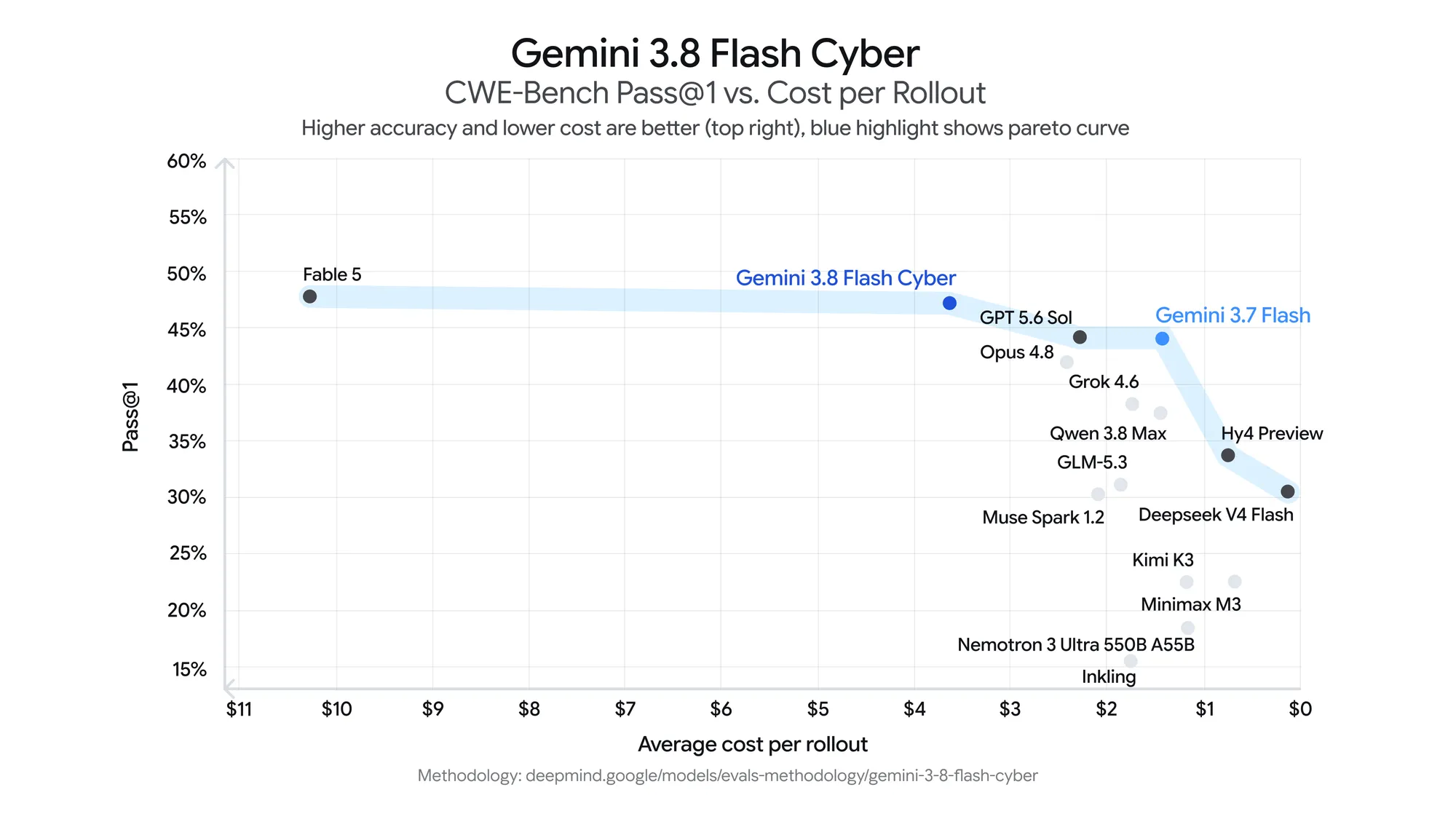
In the general Intelligence Index it scores exactly equal to Sol (61). In the Agentic Index it scores significantly lower than Sol (51 vs 58).
In both it scores lower than Fable 5.1, Opus 5 and even Muse Spark 1.3.
Am I missing something or is this not looking too... stellar?
And yet I(and many others publicly on x) chucked Claude for codex back in June. Codex is my workhorse. The main reason I use codex is because of its language. I just got really tired of reading long weirdly worded prose that I had to fix with some skill(though some people like matt pocock and dex horothy have good ideas on this, buts it's just wasteful). This is triply bad for learning newer stuff because it goes up and down the abstraction layer on any topic like mad. One moment it would be explaining a high level detail and then cite contrasts and then point indirectly to an implementation detail as an example. It's idea of explaining more abstractly was also weird in a different way.
Fable was better but I don't have 1000$/day to spend on it.
Cost and reliability are the two reasons why we don't use Claude in our product. Getting close to one nine, that's not something one can build a reliable product upon. We now use OpenAI with Gemini fallback (or vice versa depending on use case).
Personally I like Claude and have the 20x Max plan but even there I burned through the whole weekly quota with 3 prompts in less than a day using the new Fable 5.1 which is crazy. Now Opus 5 is down. These two issues are really testing my patience.
3.7 high and 3.8 medium are essentially the same on AA intelligence and cost. Output tokens on DeepSWE gives the same picture. So there might be something to it but they have done other things as well. At least the tokens are really fast.


I don't care what their data retention policies are, I don't want my data to be sent to others full stop.
Private means it's mine, it's under my control. Handing it to third parties is not private.
reply