I've taken every single LED bulb that has failed on me to pieces and it's always the same failure mode. The heatsink compound isn't applied properly to the back of the LED board. The LEDs immediately in the gaps smoke out.
Alas this isn't a problem. If a lightbulb goes, Amazon send me a new one out now free of charge and tell me to throw the old one in the trash.
This is one manufacturer, prevalent on Amazon, the Long Life Lamp Company. Long Life my ass.
They have been replaced by Philips and Ikea LED bulbs now which the oldest are 5 years old now and still going strong.
Edit: one thing to note is the really cheap ones run pretty hot. They have 105 oC rated capacitors in them. If you look at the derating curves at the running temperature they are clearly designed to last just past a year.
I replaced around 25 bulbs in my house with cheap Walmart "Great Value" LEDs just under 3 years ago and they've all been fine. Previously, I had replaced around 4 bulbs with Cree LEDs from Home Depot, and half of those were dead within a few months.
The Walmart bulbs without any special pricing were way cheaper than the Cree bulbs from Home Depot, but even better, there was some sort of automatic rebate or something like that in cooperation with the local electric company that made the Walmart bulbs $0.17. By "automatic rebate", I mean that the bulbs rang up on checkout at $0.17. No rebate forms to send in or anything like that.
"Previously, I had replaced around 4 bulbs with Cree LEDs from Home Depot, and half of those were dead within a few months."
Were those the original Cree bulbs with the heavy, finned metal heatsink around the base ?
I currently have a bag of about 14 of those that I bought (with great enthusiasm) and that burned out (or turned weird purple colors) within 2-3 years.
New style cree bulbs appear to have these issues solved. In fact, I continue to buy them as they perform better than other (satco, fein) bulbs that I have. In most cases I get satco/fein as long as they have the color temperature and output I want, but if I am having issues with a dimmer, etc., I get a cree bulb.
Those early Home Depot Cree bulbs were definitely defective. We bought a ton of them and have since replaced nearly all under warranty... twice. The first round they replaced with identical ones, which also quickly failed. (Always the same; started with an intermittent flicker, which progressively got more severe and regular.) More recently we've gotten a new design back, which seem better. Fortunately, after the first ones, it's been as simple as replying to the email thread and telling them how many more replacements I need!
The Cree bulbs have been a disappointment for me as well. There was so much buzz about then when they came out, but I've had so many where one of the elements fizzles out and kills the whole bulb because they are wired in series and the elements fail closed or very high resistance.
If I cared more I might try to take the bulbs apart in a way that I could get them back together and just bypass the failed LED with a resister to bring the bulb back to life (at 15% reduced capacity or so).
I have been very disappointed in how hot the bulbs run as well. It feels like they must be wasting a lot of energy to run that hot.
That's funny I had 3 LEDs die in a week and they were all great value. I believe I bought them 4-5 years ago. I've also had a cree die. Overall though waaaay better than incandecent or even compact CFL.
I bought about 100 regular incandescents in various wattages at Lowes before they were banned. I wish I had bought a lot more. They were about $0.25 per bulb at the clearance sale prices. CFLs and LEDs are poor substitutes from a quality-of-light standpoint. Also AFAIK there is no hazardous waste in a burned-out incandescent. You can throw it away with a clear conscience.
Can you not still buy halogens? I like the light they give out and while they are nowhere near the efficiency of an LED bulb, they last pretty long by incandescent standards and they are somewhat more efficient than the old argon bulbs.
The guy in the other comment apparently paid led .17$ and they are all still good after 3 years..
What is the percentage of survival of the incandescent light and how much electricity are you wasting until they die?
Similarly, I replaced all my bulbs around 2011/2012 after buying a new place and I have yet to have a single one fail on me.
These were fairly expensive, about $11 each (the going rate at the time), and were TCP brand, but it was unpleasant to read that newer bulbs might be far worse when it comes time to replace them, even if they are cheaper. I love the fact that they die so infrequently that I don't have to keep any spares around.
I have had good but not perfect luck with the TCP bulbs. I've had two or three die (out of perhaps 40 or so). They also have mediocre color compared to a newer design.
Nobody is going to deliberately sabotage their LED bulbs because nobody really has a monopoly on them. They probably use cheap components that are only rated for the warranty period, but that isn't "planned obsolescence".
Nobody is going to sabotage them, but they’re also not going to spend money making them list one minute longer than they really have to. If you’re focused on the short term or think reputation isn’t a big driver of your sales, then your product really doesn’t have to last very long.
I think it gets worse as time goes on, because manufacturers gain experience with the lifespan of their components and learn exactly where they can cut. If you’re not quite sure how long something will last, you’ll probably err on the side of caution and engineer it to last longer than needed in case you got it wrong.
A competing manufacturer can always offer a product that last longer and warranty it, and people might choose to purchase it depending on the price.
However, as the article notes, people may not be interested in paying a premium for a product that lasts 10y instead of 5y or 20y instead of 10y, since the tech can change or maybe it’s susceptical to other kinds of degradation.
For bulbs that are really cheap, people won't keep their receipts and warranty information. I think it will be hard for bulbs to differentiate by warranty.
If you buy at Costco, you can return them at any time in the future without a receipt. The return desk will lookup past purchases using your membership card.
I can't even trust that the company will be around in 5 or 10 years. Or that they won't come back with some BS why they won't honor the warranty, and how it's my fault the bulb is bad. Long warranties are basically worthless anymore.
That is true. It is not directly "planned obsolescence". But our whole economic capitalist system is based on the idea of consumption. That means that products by default do not need to last.
My flat has some sort of bad-quality switches and when switching on/off the lights I often used to have some failures when using classic light bulbs (I have no clue about electricity - in any case in some way when I press the on/off-button the transition seems to be "dirty").
4 months ago I bought a new lamp and decided to give OSRAM-bulbs a go (it's a well known brand in Europe but up until then I always used Philips) => 2 LED-bulbs failed within 2 weeks (I put in the 1st bulb => failed after 2 weeks => replaced it with a 2nd bulb => failed again after 2 weeks).
I then went back to using Philips-bulbs and the one I used to replace the last one which failed is still working now.
Philips seems to be, at least in my case, definitely better or at least more "lenient/tolerant" at least concerning my the switches installed in my flat.
Anybody having negative experiences with Philips or positive ones with OSRAM or the opposite?
It is a problem in the sense that it creates waste and pollution. There is a cost to throwing things out, and for shipping things across the country without limit.
two usage cases, one obvious to me but one wasn't.
the first being, areas with vibration meaning near doors and garage door openers. great locations to eat LED bulbs. this might be related to your heat sink adhesive issue.
the second is the upside down tulip light fixtures common in bathrooms, apparently they cook quite well unless ventilated at the top.
My friend's bathroom light that is now a strobe light and the landlord has yet to replace because it requires an electrician to replace the whole fixture would like a word with you.
>requires an electrician to replace the whole fixture would like a word with you.
Kind of like how replacing a gas dryer "requires" a licensed plumber to make the gas connection or you're "required" to drive no faster than the speed limit at all times.
You're getting the runaround. If it was in a vacant apartment that they were showing to people it would already be fixed. If they cared about getting it done ASAP they'd either shell out the big bucks or ignore the law.
Edit: I think a lot of people on HN don't realize how simple swapping failed parts is. Swapping a failed water heater or electrical fixture (especially light fixtures) is a waste of the skilled tradesman's time and the customer's money. Even an incompetent landlord or maintenance service should be able to get it done.
I have experience in this (US Midwest)
Most licensing regulation for these things are for professional commerce, and the more general the more they about demonstrating financial means to cover liability and/or a means of taxation, education or demonstration of work is of minimal to no importance. Aquiring general contractor licenses I often found myself using a web 2 fax service to submit pdf documents to a fax number... over T38/VoIP to the building department who could print the fax from their email as they required physical copies to be filed.
It's rarely criminal for homeowners to DIY within building code regulations, permits be damned. When the bank owns part, appraisal or home sales happen, insurance policies are involved non disclosure can be fraud.
My 2¢ on DIY from general contracting experience,
Water:
Undetected water leaks can be fucking expensive, consider location and worst case scenario when making decisions. Don't use shit like AS SEEN ON TV toilet tank gaskets or tool free water valves in a production environment.
Gas:
Thread seal tape is a lubricant that helps seat solid metal (usually) connections to create a seal, not a sealant. (can be welding agent for polymers)
Water, dish soap, spray bottle helps test connections.
Gases have different smells or lack there of, different densities (sink, rise, displace oxygen), can combust in different concentration ranges, etc so understand this.
Electric:
Changing the load or adding potential for increased load on a circuit (new fixtures, receptacles, breaker, fuse, conductor, etc) could cause arcing and lead to fire in unexpected ways. Sections of copper wire get replaced with smaller gauge at some point over a properties history and then get sealed back up in a wall, among all kinds of other wacky shit. Understand the physics and dangers.
Connections are important, and common points of failure. They should be appropriately terminated and enclosed. Use the proper size wire nuts.
All:
Valves, switches, and people are flaky so plan accordingly. Test shut-off or failsafe mechanisms and have a plan for the worst case scenario.
The law once mandated that you hire the services of a licensed electrician to replace a lightbulb. Imagine if the same laws where applied to tech. Need to update Microsoft office? No way arround it you need to hire the services of a licensed IT professional! You might get electrocuted in the process not being a professional. So it all makes sense.
It's not really possible to burn down your apartment building if you fail at updating Microsoft Office, so that's one big difference for gas/electrical laws.
Actually it is the law at every trade show I've ever exhibited at, just about to the point where you can't plug in anything without a union electrician doing it. One can usually get away with plugging in a laptop, but certainly if you need anything more than the single standard 10A 2-outlet power drop, expect to pay and wait for the official electrician (and they will kick you out of the show for violations).
Edit: I've seen this at least in NY, Florida, California
Generally, a landlord wants someone licensed with insurance to handle something like that on the off chance something goes wrong. I was going to fix the fixture in my bathroom that was shorting a bit and burning out bulbs myself. Thankfully I called my owner and he had an electrician come in because it turns out a lot of the conduit above the fixture needed replacing due to age.
Judgement proof typically means you have no money/assets to come after, so even if someone wins a judgement against you they aren't getting paid. That's why you ensure you hire a handyman with liability insurance, so that there's something (the insurance payout) to collect in the event of a problem. Do you mean something else by judgement proof?
> As long as you're just replacing the fixture and not running new line a handy man type person can do it legally.
That likely depends on local codes; not sure about light fixtures specifically, but I definitely have encountered variations in different cities in the same county when it comes to ceiling fans.
Few plumbers or electricians with a license are going to waste their time replacing your dryer or light fixture. They probably will send their (unlicensed) employee who's paid a couple bucks over minimum wage to do it. Their time is better spent on jobs that actually require their expertise. You know, the kind of jobs where you'd pay extra for a credentialed expert anyway. They probably will never set eyes on whatever you called them for.
Those laws (especially when combined with licensing requirements that exclude all but those who have a full time career in that field) are a massive hindrance to individuals and many businesses. They usually amount to little more than a potential transfer of liability. If your house burns down maybe you can try to point the finger at the licensed professional (good luck at that). The only thing it accomplishes is making it (slightly) harder for people who are habitually grossly negligent to keep working in that field. This is a non-benefit IMO because so much business is based on reputation anyway. The downside is that by artificially raising the minimum price access to access skilled labor you cause all sorts of work to be forgone because people can't afford it.
Plenty of house fires have been started by people who couldn't afford to pay an electrician but could afford an extension cord.
Edit: Since I'm apparently so wrong does anyone want to explain why. A down-vote without a reply is roughly synonymous with "your opinion is inconvenient to me but I cannot refute it"
...is using the downvote correctly. Downvoting is for comments that are not productive contributions to the kind of discussion desired on HN, responding to any post that merits a downvote is increasing the noise-to-signal ratio.
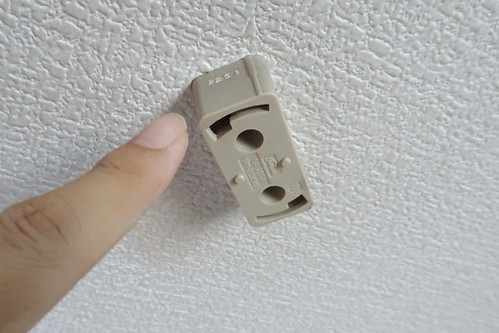
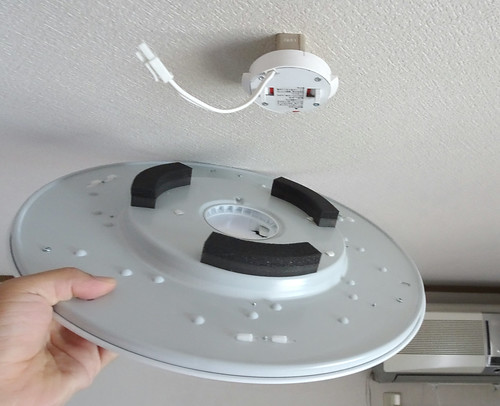
Why do you even need a landlord or maintenance service to swap a light fixture? Replacing a fixture is a bit more work than replacing a bulb, but it's not exactly hard.
There's a wide range of quality ceiling light fixtures that you just clip into place, and the LED chips are on a huge metal heatsink so they run very cool https://panasonic.jp/light/led/products.html
I used to think that, and I changed my mind. The fancy retrofit fixtures are almost universally flood lights where the diffuser is close enough to the ceiling plane that it’s visible from far off axis. The result is that the lights on the far side of the room cause unpleasant glare.
With a retrofit lamp, you can use a high quality trim baffle (these things cost about $12, are quite well designed, and are probably already in your house and put a civilized PAR30 or PAR38 LED in, and you get a much better light distribution.
Back when lamps were all standardized incandescents, fixtures could focus on quality. Now, with LEDs, I suspect that manufacturers focus on how cheaply they can build a driver and assembly that meets some minimum performance criteria. So, with retrofit lamps, at least the fixture design is separate.
(There are exceptions, of course. Very high quality dedicated fixtures exist, but they’re quite expensive.)
I was surprised at the early failures of my Sylvania bulbs. Had expected that going with a brand that has been in the light bulb industry for a long time, I would get decent quality, but they've all died in under a year. Now IKEA bulbs are my go-to, the mix of selection, quality and price is impressive compared to what I've seen but I haven't thoroughly researched this. Do Philips or GE do better?
I have only my anecdotal experience, but I'm happy with the Philips & GE bulbs. As I said, they both seem to run pretty cool. Philips makes what seem to be inexpensive-but-quality bulbs, as well as dimmable LED's that red-shift like incandescent used to. They also make a 60W yellow bulb that has very low blue emissions, uncommon for LED bulbs. Some of GE's LED bulbs have really high CRI which I like for making the basement more cheery.
One thing to pay close attention to on the package is whether the bulb can be run in an enclosed fixture. The package should always specify. Following this guidance and picking the right bulb for the fixture will help ensure you get the service life you expect. I don't think I've found any 100W equivalents that are OK'd for fully enclosed application, and 60W equivalent is like 50/50.
The last I looked at them, Ikea bulbs ran hot the packaging advised not to be used in small/enclosed fixtures because they could overheat. Do you find that to be the case with the ones you're using?
I have a couple of 2W/80lm ikea bulbs for bedside lighting, and they are room temperature.
I also own some 5W/400lm ikea bulbs for general room lighting and they do run warm, maybe something like 40°C ± 5°C. The fixture/thingy around the bulb is roughly the size of a fist.
The bulbs are pretty new so I can't say anything about the lifespan of the bulbs, but the price is reasonable, they are not the fancy smart bulbs.
I bought one of these for my basement hallway when I was finishing it out. My only concern is that a normal fixture has few failure modes; just the bulb. But if this fixture fails, I have to find a new one that will fit in the same spot. Hopefully it will last til I'm dead.
I've started doing this. Bought a large panel fixture and a separate high-quality LED current source and it has been absolutely great. Next time I build a house I'll probably run all the lighting circuits on a hefty 24VDC main power supply with small DC/DC regulators on every fixture. There's no reason nowadays why lighting circuits should be 120 or 240VAC.
Like I said in a previous comment, with LEDs, power requirements are small and distances within a house are small. Coupled with a resonably high but safe voltage (like 24 or 36VDC), there's no reason why 14 gauge copper wire couldn't work just fine for a lighting circuit.
I wish there was more selection available of that kind of thing— when I last looked a year or so ago there was basically just one option at Home Depot, and it had the aesthetics of something you'd put in the laundry room.
Worse than that, though, it was unusable with a dimmer switch; the whole thing visibly flickered every few seconds. I felt bad returning it because I really wanted it to work out, but the quality just wasn't there.
I have an LED fixture that I got from home depot that is dimmable, no flickering. It's connected to a normal dimmer switch. I bought it about a year ago.
My other LED fixtures were ordered through aliexpress. The fixtures were fine, but the transformers that came with the fixtures all failed and had to be replaced (overheated, melted the plastic casing). This turned out to be tricky, because the LED drivers available on ebay and aliexpress are never the same, there are constantly new shoddy ones from noname brands, and the ones I had bought before tend to be nowhere to be found when I need a new one.
I didn't know that the fixtures themselves had dimming features. I put "dimmable" LEDs in my can lights in the basement, and I'm really unimpressed with them. They don't flicker[1], but they don't get very dim, either.
[1] Except after a power outage - then they eerily flash on and off like something out of Stranger Things.
That is the constant frustration of this economic model. Either you buy the driver (or the LED bulbs for that matter) from a shop in your own regulated economic area (like the EEA) and have them handle quality assurance (including the selection of the product) and warrantee, or you get the same product directly from China for a fifth of the price and have to handle the occasional failure yourself.
The sad thing is that the latter is still cheaper than buying from a 'local' shop.
I have had good success with, and have been happy with the quality of _MeanWell_ LED drivers and power supplies. You can get them through Mouser, Newark, Digikey etc.
This is in contradiction with the article, which says that the driver is the cause in 90% of cases.
EDIT: This was not entirely correct as the article says:
> The US Department of Energy (DoE)’s solid-state lighting program supports research and development of LED technologies, and their website contains volumes of data on LED lighting systems. Their Lifetime and Reliability Fact Sheet contains data on the failure rate of 5,400 outdoor lamps over 34 million hours of operation. Interestingly, the LEDs themselves account for only 10% of the failures; driver circuitry, on the other hand, was responsible almost 60% of the time. The remainder of failures were due to housing problems, which may not be as applicable for bulbs in indoor use.


Alas this isn't a problem. If a lightbulb goes, Amazon send me a new one out now free of charge and tell me to throw the old one in the trash.
This is one manufacturer, prevalent on Amazon, the Long Life Lamp Company. Long Life my ass.
They have been replaced by Philips and Ikea LED bulbs now which the oldest are 5 years old now and still going strong.
Edit: one thing to note is the really cheap ones run pretty hot. They have 105 oC rated capacitors in them. If you look at the derating curves at the running temperature they are clearly designed to last just past a year.