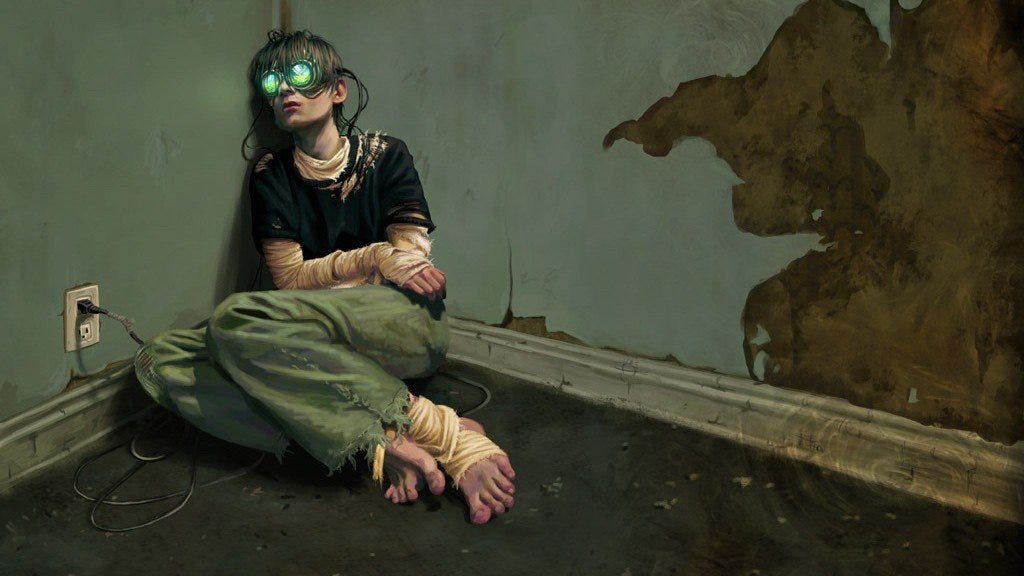
On the other side of this, some people require external emotional regulation because their brains fail to do so for them and take medication for it. So having this as a treatment option isn’t necessarily something we should avoid pursuing for cases where medication isn’t an option for whatever reason.
Yes obviously, just like there is a legit case for brain implants for paraplegic or wheelchair-bound people. However, it's easy to see how things could easily go way too far and lead to a world of VR-addiction and dehumanization.
As always, technology is a tool, and a double-edged sword. It's just hard to predict how it will change society sometimes. IMO brain implants are actually way more dangerous than genetic engineering ever could be. People creating designer babies with blonde hair and a higher IQ is nothing compared to the risk of people no longer being able to feel empathy and sadness in response to problematic situations. Maybe we'll even stop feeling love, because it's just too inconvenient.
Oh and uh, yeah: brain implants could also make it possible to implement the notion of thoughtcrime. I hope, for your own sakes, that your political beliefs and opinions are in line with that the majority has deemed correct.
We already have segments of the population who have to deal with various forms of addiction and dehumanization and this has not stopped us in the development of new medications and technologies.
Should we prevent the development of this technology due to its potential for abuse? Should we develop the technology for its potential to benefit ourselves?
Obviously brain implants that can read and write thoughts come with an extraordinary amount of power and it is both wonderful and terrifying to imagine the potential benefits and dangers that it could provide us.
I think we will do what we have done through history and someone somewhere will develop the technology if it is possible eventually regardless of our qualms with its potential to destroy people.
But one thing that separates BCI from everything is the implant itself. Sure, people have addictions but they also have that choice of stop doing that and focus on things that are important to that person (I know that overcoming addiction is way tougher than just writing about having choice as I'm still going through it at the moment, but one can surely get out this).
The thing that differentiates this from earlier technological advancements is that now there is some hardware directly wired in your brain whereas previous technology was outside of your body and I don't think that I would able to accept that without having an impending worry about implant having access to my brain directly.