It's getting ridiculous here in Sweden. Actual product names (they tend to use English, sometimes with intentional misspellings to get around regulations, I assume):
Was thinking this is going to lead to some cringey product names. "veak" and "vausage" for the uncreative and it goes downhill from there. Our family calls it "feat" for "fake meat"
The vegan community in France already uses names like "Faucisse" and "Fauxmage" based on "Faux + Saucisse" and "Faux + Fromage". I believe there's also "Vromage" (Vegan + Fromage).
This debate won't end in a hurry. We've been arguing about what beer is since the German beer laws and before. British Sausages cause hilarity in Europe. The idea that definitionally we can state a-priori what is or is not the current meaning of a term when language itself is plastic is kind of broken because the distinction between Cows, Cattle, Beef, Veal, Bison, Oxen, Bullock and Bull, Buffalo and Bison and Cow, Game or farmed, Fresh or was that snap-frozen, is endless.
Cut a "steak" off that plank, no no not cross-grain, I meant along the grain. Ok so nobody calls a plank a steak. but we do talk about "grain" in muscle and wood, and guess what, "grain" introduces legal nightmares when it comes to labelling cuts of meat, and wood.
A very cross-grained argument. Oh yea, "corn" and "wheat" are knocking at the door ever since english encountered the americas.
If we succeed in growing cell cultures from samples as in Kornbluth and Pohl's "Space Merchant" chicken Little (1950s) or Asimov's 'zymoveal' (1950s) what are we going to call it? Is cell cultured meat still meat and this is just an attack on the plants?
Honestly I don't really see why. Yeah the really cheap ones have a lower meat content than other countries tend to use, but german bratwurst are often around 85%(ish) meat, and it's very easy to find British sausages which have that much or higher meat content.
I think like many British food stereotypes, it's likely several decades past being factual, and probably has its roots in the post-war and post-rationing eras.
When you're in a culinary competition with Germany, you know you've already lost.
Kidding aside, don't think they're really known outside of Britain. You are probably bringing it up because at some point the EU objected to it being called a meat product because, at least then, a selection failed to meet the required (muscle) meat content (British sausages are very fatty). Precisely because words mean different things to different people, it is worth attempting to come up with a definition and then using it.
I don't see why either. I like some cereal in my sausage, I think it adds to the texture, and moistness, and I like the mouth feel of a blend of ingredients, but the relative % of meat and non-meat, for legal compliance with "sausagehood" is at root the problem. More filler-and-binder than meat? thats wierd. But.. legal.
Does it relate to rationing? I am sure it does. Remember the UK kept rationing to the 1950s and was not faring well postwar because the US cut off the taps, when the war ended. Rationing improved food quality for people on average, but there was a net decline in high quality inputs for a decade.
I am told by Uruguayan friends that what we eat in Fray Bentos pies, would not be acceptable sold over the counter in Montevideo. But that said, they are immensely proud of the link to the british diet!
Fray Bentos! I haven't had one of those in... more years than I can remember. Puff pastry, processed sauce and ... lumps :)
I've migrated to Australia (again) recently and the diet here is pretty British too. Fish and Chips everywhere, though with more interesting fish and calamari on all the menus. 'Servo' pies which are sold from gas stations and are about as bad as fish and chip shop pies in the UK.
Sausages (well, 'snags') are a big thing here too, though the default meat seems to be beef. This includes my fix of real bad junk, which I used to indulge in a couple of times a year, usually when hungover, a McDonalds sausage McMuffin. It's just not the same when it's not cheap-ass over-salted pork...
I don't mind some cereal in a sausage, but that said I really did get to like "Heck" and some of the other 97%+ brands.
> I migrated to Australia (again) recently and the diet here is pretty British too
I seriously think this misrepresents what most Aussie's put on their fork (or more likely their chopsticks). Go into any shopping mall food court, out of 20 offerings maybe 3 will be the McKFCKing chains, there will be a very multinational salad bar with a roast meat side, a juice bar, and then 2 or 3 Mediterranean style, a Mexican, and maybe 10 Asian (3 styles of Chinese, Thai, Viet, Korean, Sushi and a few fusion style). The final seafood will do your Pop's Fish and Chips but also a gazillion crustacea and molluscs. Supermarkets are full of international food sections, fruit and veges that just wouldn't be available 30 years ago.
Definitely 50 years ago it was very much plain lamb chop and 3 veg, but anyone under 40 almost certainly will be eating very multiculturally.
I'm not saying that's the complete picture, yes there's a great diversity of food here and heavy asian influences abound.
However there is definitely a heavy British influence, I know of only four countries on the planet that have fish and chip shops distributed all over the place like this (and not purely for tourists): The UK, Ireland, NZ and Aus.
I've got a friend in the UK who during covid decided to write a sort of allegory, sci-fy, children's story with heavy references to British culture - it's been one of the funniest things I've ever read. Anyway, in his story there is an "Isle of Fray Bentos" and he has a character named "Vesta Curry" so it makes me laugh to see it referenced here.
>"We've been arguing about what beer is since the German beer laws and before."
The Reinheitsgebot had nothing to do with a debate over what beer is and what it isn't.[1] The purpose of the regulation was to stop driving up the price of wheat up so more bread could be made and also to protects people from unscrupulous brewers using toxic additives in their brews. Everyone still agreed that thing was beer even if they had different preferences for the type of beer they preferred.
For example, coconut milk is named so simply because it's a white liquid. It's not trying to be a replacement for milk, or trying to confuse people, it's just a metaphor.
But vegan milk, sausages, etc, are all meant to be as similar to the real things as possible so as to cause confusion.
> But vegan milk, sausages, etc, are all meant to be as similar to the real things as possible so as to cause confusion.
Source? I would assume they are as similar to the real thing as possible in order to be as similar to the real thing as possible. I.e. an alternative for people who do not want to source their food from animals, but do want their food to have characteristics similar to those that are sourced from animals.
I think you are at least half right, but not entirely right. "cause confusion" is at least in part going to intentionality, where I agree the intent is to try and go beyond "its white" to "it has similar mouth feel, it whips, it makes a good coffee"
But Veal and Beef is actually similar. Rose Veal is most definitely not Veal. It was named Rose Veal to try and market what they do with slaughterhouses and with discard young from the dairy industry, to break from the old practices (male milk calves have low value. farming it for veal was how farmers made money from discards)
Rose veal is not veal, why did they keep the veal word?
They’re meant to be the same in what we value about eating them but not the same in how they’re produced. Same taste, no death.
For a long time the taste couldn’t compare for any product. The fact that the pressure is building to keep the death part can only mean the taste is good enough for enough people that buying habits are changing.
I can see the protection of local business, and France has a strong farming and taste leadership history, but this change towards plant meat is inevitable and good for the world as a whole. Countries can innovate or end up losing this battle and only importing fake meat tech.
agreed on genericness. I have generally at least 2 options anywhere I go - sausage or turkey sausage, with the default assumption of 'pork'. But many places around me have (pork) sausage, turkey sausage, and vegan sausage. I don't think it's that hard, or confuses people (or, at least the people who care about vegan in the first place).
> (edit: almost forgot we are talking about France, a country which tries to control its language by law. Carry on then!)
I get why this is controversial, but keep in mind that a lot of countries do that. English is the outlier here, and that's because it's not being threatened the same way other national languages are.
Where you are absurdly wrong, is where you say that the threat to a language is the reason for the existence of a language academy. It simply isn't; the reasons are purely historical for almost all languages. I mean, Cardinal Richelieu founded l'académie française. French was not threatened during the reign of Louis XIII!
French may be a bad example but at least some language regulation is actually nice, otherwise you end up with the dumpster fire that is English spelling. I say this as someone teaching two young children to read.
> "Sausage" is such a generic term, covering so very many things, that it's bizarre to try and restrict it.
In France various types of sausage are with protected names and origins ( e.g. Toulouse, Montbéliard, etc.), so usually sausage is a very precise term and you know what you're getting.
This is a very interesting point actually. Apple used to mean just any fruit in general as well. Deer used to just mean animal too.
But I guess arguably the question of whether confusion is being intentionally sowed has more to do with the how the the commonly understood meaning of words today than their historical meanings.
Maybe a better statistic is: how often to people buy vegan/meat products mistakenly when trying to but meat/vegan products. It's obviously not an easy statistic to gather, but it is probably a bit more tractable than focusing so much on language in particular. I've certainly made this mistake myself.
Who the fuck is buying vegan meat and being like "oh I thought this was meat"? Do we seriously need to legislate that? There's no real victim here, it's just a bunch of people who are sour or feel threatened by meat alternatives. It's ridiculous.
Just this week I bought two tubs of vegan yogurt by mistake.
They were the same shape, size and color as the milk based yogurts sitting all around them on the shelf. The only clue was the word "soya" printed at the bottom edge of the tubs in small letters. The kind of letters you'd expect to tell you something like the container size or the country the milk came from.
To be fair this vegan nogurt tastes almost the same as the real thing. But I did not appreciate being tricked into buying it.
Of course I see a problem. Transparency should always be a top priority. My intention was not to disagree with you, just to provide a different lens to view this. After all, are most American consumers aware of the conditions in which the animals they eat are raised (what they are fed, how they are treated, what types of drugs they are given, how long they live, general quality of life, etc…)? I believe this is just as important as what gets printed on a label.
Do you realize that almost everyone who buys animal products is being tricked into doing so? It's critical that food companies keep people in the dark about how animal products are made.
I would love to start product line "Beyond Vegan" with tag line of "better than vegan food" with Vegan word being very big. And then have it contain lot of meat. Entirely honest and not in any way misleading marketing. And no vegan should be able to complain.
I think this is misleading in the effect is has. Omnivores still eat non-meat products, but the inverse isn't true and is in-fact pretty fucked up (if the person being deceived believes that eating beef is akin to eating dogs).
I agree that products shouldn't be deceptive, but this is a false dichotomy. More accurately the example should be "Beef Burger", then have it written in small "(dog meat)" as (at least in the West) even meat eaters don't like the idea of eating dogs.
Both beef and canine meat are from mammals. There isn't really much difference between those. Ofc reasonable labelling is reasonable to expect. But they are still meat and nearly every human including vegans can perfectly well eat either.
Same does not apply to companies that try to mislead people by calling something not meat meat or cheese or so on.
Hard disagree. I grew up vegetarian and after 18 years of such a diet I found myself in an environment where I had no choice but to eat meat in order to meet my caloric intake requirements (military basic training, so it was pretty damn low quality meat too -- and don't get me started on field rations (MREs)). I most certainly did not get sick.
Anyone getting sick is most definitely having a psychological reaction (i.e.: a choice) rather than a physiological one. As a young man out in the world on my own I quickly discovered that all the anti-meat propaganda that I was raised with was nothing other than just that. No matter what you're eating, a balanced diet is paramount. Everything in moderation.
Oh wow, every time I see these laws about how "consumers must not be tricked into thinking this liquid oat-based product is in fact not bovine titty juice", I think to myself surely there is no one actually falling for this.
The viciousness in your comment makes it clear though, that it does affect you quite a bit.
Well yeah, we opted for `milk` because it's easier and I do call it milk in my everyday usage if that comforts you. I did get caught up in the post I replied to though, so I apologize for using a degrading sounding name for milk.
My point is, milk is not as clear cut as you think it is: there is cow milk, goat milk, sheep's milk, coconut milk, in German we even have a type of cleaning product that we call a variation of milk (Scheuermilch) ... but almond milk is too much for the everyday consumer? Come on, at least be honest.
Also, yeah I'm sure I enjoyed my mother's titty juice, and I never thought I'd write that sentence. It was good enough for the time being and excellent in my development (I assume), but I have since evolved and moved on to other things without looking back. I'm sure there is a metaphor in there somewhere ...
There's intent too. All of the Almond Milk I buy has the word "Almond" on the package with pictures of almonds. The packages of meat substitutes tend not to be so explicit.
> t's just a bunch of people who are sour or feel threatened by meat alternatives
Kast, a right-wing populist politician in Chile, made a big stink during his failed presidential bid over "Not Milk." He said only milk from "happy cows" should be promoted. These so-called proponents of the free market sure do hate competition.
In the US, the dairy industry tried this and thankfully lost (in California): The Animal Legal Defense Fund represented Miyoko’s Kitchen in its challenge of unconstitutional restrictions placed on plant-based dairy products’ marketing and labeling
Miyoko makes vegan cheese and brought the California Department of Food and Agriculture to court to challenge their ban on the term "cheese" to represent her products. She won.
That would be completely fair, assuming the reverse is true as well. That is, being able to sell real cheese as "vegan cheese" to trick vegans into eating it.
I was tricked into buying vegan sausages. They don't deserve protection either.
I think “real” is a bit of a problem there because if vegan cheese is real it means it’s really vegan. I think the analog you’re looking for would be “fake vegan cheese”, or to make it less double-negativey we could just say “dairy cheese” which would be a perfectly understandable modifier on cheese just like how “vegan cheese” is a perfectly understandable modifier.
If vegan cheese is a problem i’d like to hear your take on “electric car”
> I think “real” is a bit of a problem there because if vegan cheese is real it means it’s really vegan.
"Real vegan cheese" should not be a problem as long as you're selling a real product. The problems would begin if you were selling real cheese as "Really vegan cheese".
I don’t think the phrase “real vegan cheese” is linguistically clear in any way. Is the “real” about the “vegan” part, the “cheese” part, or the “vegan cheese” part? I.e. “real dog food” has nothing to do with the realness of the dogs, it’s about the “food”. But then in the sentence “real prada bag” the “real” is about the “prada” portion not about the “bag” portion. “Real” can modify either the modifier or the noun.
“Really” makes the sentence more clear, because it adds emphasis to the “vegan” modifier on “cheese” - it wouldn’t apply to the “cheese” part directly. I.e. in the sentence “really big cheese” the “really” is clearly adding emphasis to the “big”.
I imagine this was probably user error on your part. The vegan cheese is usually on the other end of the grocery store from the real cheese, and also usually says 'vegan' prominently, and also there are only like 2-3 brands that make vegan cheese (Miyoko, Daiya, maybe 1 other?). And vegans still usually have to read the ingredients to make sure. Non-vegans could probably do the same if it were that important.
Ah, the “you’re holding it wrong” argument re-contextualized as “you’re just shopping wrong”.
Unfortunately that is not always the case. I don’t know about the parent but I accidentally bought a “Chick’n Burrito” that was right next to the meat burritos. It did not taste like chicken.
Could it have been avoided had I been more careful? Sure! On the other hand vegan dishes taste better than fake meat dishes and I really don’t appreciate the intentionally misleading labeling riding on the good PR of “chicken” and “butter” to try to sell their fakes. Missing a character swap or substitution is not a difficult thing for literate people who are also very tired at the end of the day.
Again, vegans almost always have to read the ingredients/labels, on every processed food product they plan to consume. The little 'vegan' icon on the back is new and not consistently used. Choosing a plant based lifestyle is A LOT more burdensome than not doing that. I know because I've switched back and forth many times and am married to a vegan. Whey, casein, random cream, honey, they're in everything.
Even so: reading ingredients is honestly not that hard.
Just because a plant based lifestyle is burdensome, doesn't mean people think it should be. And by that reasoning neither should any other diet. So I don't get why the projection of your experience onto the experience of others is so necessary
Oh believe me, I do especially after that, but that does not justify misleading labeling practices. It’s absolutely intended to be deceptive and ride on the good PR of other products.
That's not misleading labeling, and the naming is intended to explain what it's attempting to mimic. Many consumers appreciate that and use it as a signal when shopping.
If it says, "milk" or "cheese" or "beef" I absolutely should not have to read the label. These things were made by farmers thousands of years ago, and have fairly simple "recipes".
If you want to sell some vegetables or vegetable oil to vegans, I would have thought that vegans would go for it without the unappetizing association with dead, smelly, greasy animal carcasses.
Why does vegan food have to resemble the things that vegans avoid?
Even if something is milk, cheese, or beef, do you just... pick it up without looking at what the product is, or where it came from or is sourced from? Read the labels. It is not hard. You exist in a world with other humans who use words across a range of things and it's on you to know what you're buying.
>Why does vegan food have to resemble the things that vegans avoid?
First off: it's not just vegans who buy or are interested in this stuff. People can find it beneficial from a sustainability point of view.
Second, people like the originals! We have rich culinary history with recipes and tastes that people don't necessarily want to give up, but may want a more sustainable/cruelty free/[insert your reason here] alternative.
If you're so indiscriminate as a shopper then what does it matter if you eat vegan alternatives? They're better for you, better for the planet and often taste better.
The standard explanation is that those are aimed at ordinary consumers who wish to reduce their meat consumption but can't unless they taste something that tastes like meat (resp. dairy).
Of course butter and chicken have good PR: they’re delicious, nutritious and widely popular. They’re so pervasive in fact that you hardly notice their presence and if you don’t know what someone likes, chances are butter and chicken are a good starting point.
I've never seen anything more confusing then the two words "vegan cheese". Even after consulting with a dozen scientists I couldn't figure out what it's supposed to mean. So I bought it and surprisingly enough, I didn't end up with cheese made from milk as expected, but with cheese that was actually vegan! Could it be me? No, obviously it's somebody else's fault. Like it always is. It's never me.
you're assuming what you want to without reading the comments carefully. The "user" was tricked into buying vegan sausages. No one said that they were called vegan sausages.
It doesn't matter whether we talk about cheese or sausages.
The main point is that when you make laws that make it illegal to call something "vegan cheese" or "vegan steak", you are even more likely to be confronted with those confusing and misleading labels. If anything, the law should be the other way round, require a label that plain and simply says "vegan $product" prominently.
> The vegan cheese is usually on the other end of the grocery store from the real cheese,
Usually, but not always. I’ve seen them collocated more frequently of late and almost made the same mistake before comparing price. The text was so small I would not have noticed without price setting me off. It clearly can be deceptively packaged and I would imagine many marketing departments will try if they think it’ll make them money.
> there are only like 2-3 brands that make vegan cheese (Miyoko, Daiya, maybe 1 other?)
Off the top of my head:
Miyoko's, Daiya, Kite Hill, Violife, Forager, Field Roast (Chao), Nuts for Cheese, Dr. Cow, Vtopian, Parmela Creamery
And with a bit of googling:
Moocho (from Tofurky), GoVeggie!, Follow Your Heart (how'd I forget them?), Treeline, So Delicious, Koko Dairy Free, Vitalite, Sheese (hard to find in the US, I think), New Roots, Tofutti (ick), Kinda Co., Cheeze & Thank You, Darë, Catalyst Creamery, Moo No More, RIND, SriMu, Virgin Cheese, Reina Royal Vegan Cuisine
Ok, you get the point.
To be fair, a number of the brands in the second list are niche artisanal products you can only get either directly from the vendor, at niche shops like a vegan cheese shop, or online from a place like Vegan Essentials.
I get you're being outraged to be funny, but in seriousness no you aren't allowed to trick people into eating something they do not want to. Its important to have standards about clear communication on this, its easy enough to cause harm through accident or honest mistake let alone intentional malice.
Please, no. Vegans already have to scan all the ingredients for nearly everything they buy with every purchase (yes, there are products labelled plant based that have animal products, "soy cheese" with caseine, etc.)
Accidentally buying a "sausage" that wasn't to your taste could have happened even if it was animal product based. If the status quo changes so that non-vegans need to start reading ingredients sometimes, or they might end up buying food that isn't enjoyable to them, that's a positive in my mind. People should be more conscious about "how the sausage is made" so to speak.
Something tagged "VEGAN Cheese" in big characters with "This cheese is from our beloved cow Vega, not actually ugly soy stuff but is good for you, and remind that you started this war, not us" in tiny characters at the foot would receive a priceless publicity and lots of love.
I don't even know how that is possible unless one is extremely unattentive. In my experience, vegan and vegetarian substitute products are universally located in the specialty section of the grocer and nearly universally advertise their plant-based status prominently.
These products cost more than the real thing, so why try to fool anyone into thinking they're real meat? The market that is willing to pay more will do so precisely because they aren't real meat so that's what you want to advertise.
To be fair, "Beyond" products (Beyond burgers, beyond sausage) require grocery stores that carry them to place them in the meat section (though the store may also place them with the vegan meats).
The idea is that people will get introduced to "close-tasting" plant-based meat alternatives, and it seems to have worked out pretty well for them, since they've been incredibly successful.
It's been 18 years since I've eaten real meat, so I'm perhaps not the best judge, but they seem very similar to me.
As I mentioned elsewhere, I'm pretty sure they don't 'require' that. All the grocery stores near me that have Beyond keep it in the meat substitute section and don't have it in the meat section at all.
The US meat and dairy industry have asked for similar bans as well.
The problem is, consumers aren't actually confused.
Different names will used if need be and consumers will continue the trend of reducing their meat consumption for environmental, health, or ethical reasons.
The market wants both. Someone just transitioning from may be explicitly looking for a plant-based version of what they've been eating.
Someone raised vegetarian or who hasn't eaten meat in a long time may repulsed by the thought of eating meat has no interest in names that remind them of eating animals.
What sucks is I think the clones are terrible introductions to vegetarian food compared to the real deals. Screw a fake chicken nugget and ketchup, give people a falafel ball and yogurt sauce. The best vegetarian food there is makes no attempt to be fake meat, it stands on its own.
I like fake meats though, because I liked real meat when I ate it and I'm nostalgic for the experience. I like eating 'brats' with my family at cookouts because it is part of the tradition, and chick'n nuggets are significantly less trouble to prepare than chunks of firm tofu.
Don't assume everyone is a vegetarian or vegan for the same reasons.
Also falafel is awesome and I wish there were more fast-food falafel joints in the world.
I enjoy falafel, and I also enjoy Impossible sausage and grounds. The latter works nicely in spaghetti or stroganoff; the former does not. I like having a wide variety of options.
If you’re using chicken nuggets as the example you’re way off. Every vegetarian and vegan swears by Morning Star buffalo nuggets and the Gardein Ultimate Nuggets are better than chicken.
You’re right about a lot of veggie substitutes but nuggets are one of the cases where it is just as good.
I mean that’s what I assumed when I first bought them. After I realized my terrible mistake I sent a strongly worded letter to the FDA demanding they be called bufallow nuggetz to alleviate any future confusion.
I mean they were right next to the mammoth bites and dodo eggs, how was I supposed to know?
I don't know, the latest generation of fake chicken nuggets are remarkably close to the real thing, and frankly I prefer them considering the horrible practices around industrial chicken farms.
I was going to suggest this is an over generalization but interestingly when searching for example images you seem to be right — every image I looked at had things like “vegan” or “soy” in much smaller letters than things like SAUSAGE or CREAM CHEESE.
I eat a mostly plant based diet and primarily recognize the options by brand so I never really noticed this. E.g., I know that Soy Station brand “cheese” is never real cheese despite anything else the label may say. Ditto something like Field Roast’s various “meats”.
At my local grocery store in Massachusetts, some fake meat products are now displayed in the meat section. The thing is though, they (Beyond, etc.) are sometimes more expensive than meat! In some contexts its considered the premium product, and its also there so people having a barbecue or something can provide an option for non-meat eaters. I don't believe at all that they're trying to trick anyone--its more than that. They're trying to position their products as a standard choice, not something from the "health food section."
Its so ironic because vegetarians I know gag when they walk by the meat and fish section and smell everything raw. Making them go there to get their protein seems a little cruel
Don't you have fridges with everything wrapped in plastic? I would expect the non-meat equivalents to be there alongside those that contain meat. It would be strange to have them at a butcher or a fishmonger counter, but most supermarkets have a fridge of pre-packaged processed meat products with varying quantities of meat and filler.
They don't require it, they request it. Frankly a terrible idea in my opinion because a lot of meat eaters, like GP here, have a persecution complex and this only feeds into that. My grocery store keeps it properly in the "meat substitute" section.
Secondly, I think a supermarket here in Denmark explained it best: They put the same type of meat-based and plant-based together because that's where customers expect them to be, it's simply easier for the products to be found.
Dumb semantic game with the world "real". When they are pretending to be non-vegan/meat based products the word "real" means the original they are copying.
>Secondly, I think a supermarket here in Denmark explained it best: They put the same type of meat-based and plant-based together because that's where customers expect them to be, it's simply easier for the products to be found.
This is well and good but I think the parent comment brings up a good point in that the distinguishing characteristic of the product is being minimized in the packaging - this is deceptive, right? You'd instead think that you'd want the distinguishing element to be boldly labeled, so minimizing it does make it seem at least like comfort with the idea of people mistakenly purchasing the product.
For instance, as someone else noted in this thread, Impossible has clear labeling. [1]
An example of the opposite might be Just Mayo, which is not, in fact, just mayo. In 2015 the FDA sent it a warning letter [2], and it had to adjust its packaging to make it clear that it was a plant-based product, although the name remains.
How significant is it as a source of commercial fertilizer? A rounding error, from what I can tell. An article on the situation in Germany gives it the potential to replace 5% of phosphate, if all of the bonemeal was used, and currently, barely any of it is used that way.
It isn't. Not to mention that 80% of the soybeans are used to feed livestock anyway[0]. This is a bullshit argument, as most tend to be when it comes to this topic.
They do this with eye drops, too. If you're not careful, you'll get homeopathic eye drops which are just water. And it's hard to see tiny print when your eyes are sore and they sell them in the pharmacy, next to real medicine.
I'm still not sure what "apis" is, but I hesitate to put anything related to bees in my eyes, given that this is a common allergen and I'm allergic to enough things already. One can only hope they dilute it out properly, or it might be worse than useless.
I’ve also been confused. I went to what I thought was a health food restaurant and ordered iirc a chicken sandwich. Received gardein which if you’ve had it is like a 1990s tier veggie burger aka not good. The cheese on it was also fake american cheese which itself was never cheese to begin with, but they still called it cheese despite it being nothing like cheese in taste or texture and only vaguely in color. At least let me know what I’m getting into instead of playing cute and having this game with the menu.
I've tried a lot of vegan alternative foods because I like trying new things (unfortunately for vegans, I also love meat) and I've never had a vegan cheese substitute that was worth purchasing, ever.
I've found it's taken ages for the various makers to come around to the fact that you have to compete on taste, otherwise none of this is worth buying.
There's finally a few (e.g, Violife) who have started to get close. Kite Hill's almond ricotta is probably 1:1 for me and I eat it when I find it on sale.
I think if you're after "luxury" cheese (the kind you might enjoy with a bottle of wine) it's harder, but for day to day cheese you throw on a sandwich/tacos/whatever it's passable.
(My two cents, of course - everyone tastes different, and you should eat real cheese if that's what you want)
the overwhelming majority of cheese I eat is old cheddar or mozzarella, and I haven't seen a vegan cheese does a simulation of either worth talking about. Cooking them is even worse, while cooking cheddar or mozza is great.
For a long time, all vegan cheese was bad. Some was horrible. But recently there some that made from primarily from nuts and beans that are quite good.
Eh, Mozzarella is a tough one. I'd agree there's little options there yet, but I don't use that often enough to know if there's anything new (the wife also prefers getting a ball of fresh mozzarella sometimes, so I don't bother with alternatives there).
Cheddar though... I'd have to disagree. To each their own though!
> The cheese on it was also fake american cheese which itself was never cheese to begin with,
That’s not true. American cheese is built on cheese but adds butter and cream and sodium citrate to it as an emulsification. The product is a sort of cheese based product of varying quality of rather poor (common) to essential (any good hamburger).
So maybe it’s not cheese on it’s own, but it is a product of cheese and the core ingredients are (should be!) dairy.
Copying from an earlier comment of mine, "American cheese" or "processed cheese" is often (but not always) a blend of materials none of which begins life as cheese:
> Typical formulation for Analogue Pizza Cheese, from Fundamentals of Cheese Science:
The list above is for "analogue pizza cheese" but that's just the most common use of this kind of "cheese": as pizza topping.
So, in a way, "vegan cheese" is not the worst kind of thing in the market that's labelled as "cheese" while not even close to the real thing.
Btw, many people who are not vegan or vegetarian eat this stuff and think it's cheese. I mean because it's on pizza. And it kiind of melts, right? What else do you expect to find sort of melting on top of pizza? Cheese!
So, yeah, 100%, you can totally and absolutely fool consumers by emulating the look, taste and feel of a real foodstuff. But usually that's because those consumers are so used to eating fake stuff anyway that they have forgotten what the real thing tastes like... if they ever even tasted it.
I make American cheese all the time. 90% of the ingredients are cheddar cheese. Lots of good burger joints do this too. But yes, there’s very bad versions as you’ve described.
The main idea is to take a mild cheddar and tame it further while changing its texture and to make it melt nicely. This is why any other cheese on a hamburger is inferior.
Cheddar should already melt nicely. Maybe we're talking about different cheeses called "cheddar"? I've never had American cheddar, maybe it's different than the English kind?
Depends what you classify as confused. I'm a consumer for both meat and plant based replacements. Sometimes it takes slightly longer to verify which one is which when they're next to each other in the shop. It's not a big issue, I don't think I'd actually ever buy the wrong one, just mildly annoying.
Although some are on the extreme side. If you put this next to actual bacon and I'm in a rush with a kid, I could imagine not noticing https://postimg.cc/BLc8qQLW
I have twice been tricked and bought "chikn" or similar. One time the product I bought I was incredibly disgusting, the other time it was alright and edible.
I found that when I ordered McDonaldn's chicken nuggets that there were actually 38 ingredients, 13 can be derived from corn. http://www.viewzone.com/mcnuggets.html
> Different names will used if need be and consumers will continue the trend of reducing their meat consumption for environmental, health, or ethical reasons.
Consumers are not reducing their meat consumption. Instead meat consumption is increasing:
> As a global average, per capita meat consumption has increased approximately 20 kilograms since 1961; the average person consumed around 43 kilograms of meat in 2014. This increase in per capita meat trends means total meat production has been growing at a much faster than the rate of population growth.
You are right. I was thinking of the decline in dairy consumption in the US, which has been decreasing. Per-capita cow's milk consumption has been decreasing for 70 years here:
Sadly this is just another layer of protections to the industrial meat complex. It won't be long before we have to use some Johnny Dangerously-style [1] codes to order a veggie burger, the farging bastidges.
> Sadly this is just another layer of protections to the industrial meat complex.
How so?
I think it's a very good idea to not allow product marketing to (ab)use terms to confuse people. If people want to eat meat that's their business. This is like that old trend of putting a "milk" label on almond drink/juice. It's just a straight up incorrect.
The purpose of the names of these products being "steak", "sausage", etc isn't to trick meat eaters into eating something they don't want to. It's to illustrate what they are.
Let's take a vegan burger patty for example. What's a better illustration of what is in the packet? "Vegan burger patty" or "Flat concoction of soy and other ingredients". It illustrates use.
The people arguing in this thread about how they "were tricked into buying something vegan, yuck!" are not arguing in good faith IMO. They are so adamant in their diet and (I'm guessing) feel threatened by the change in recent years. Being vegan isn't really an outlier that everyone makes fun of anymore.
I used to do the same a few years back, until the gradual realization came that this is the direction we're clearly heading towards. Now, I personally can't wait until meat is priced at a level that most people simply can't afford their current diet anymore. At least they will have their precious words like sausage and steak to hold onto.
Honestly, to the people suggesting to bring out animal-based products and call them something to explicitly trick vegans into eating them: who hurt you? It can't be the one time you bought a product you didn't know before without reading what it actually is, that turned out to be vegan, can it? Or did you immediately develop a B12-deficiency?
For the sake of living together on this planet, please choose another topic to be a dick about.
Not being able to use Sausage is ridiculous. It's a tube of something. It doesn't need to be meat. You already need a qualifier to understand what it's made from.
Since this is a law in France, trying to apply English definitions is probably unhelpful. Here’s my translation of the definition[1] from Dictionnaire de l'Académie française, the official French dictionary:
> SAUCISSE (n) Intestine filled with chopped meats, most commonly pork, seasoned in various ways, which is often eaten hot.
This does seem to fairly definitely exclude vegetarian options.
In the US, at least, most commercial sausages are made with artificial casings, rather than gut casings. I'd be surprised if that wasn't also the case in France as it makes industrial-scale production a lot easier without much difference in end product.
Despite their efforts, dictionary definitions aren't always in sync with common usage, and it seems obvious that the latter is what we should regulate on.
Eh, I remember being confused about American breakfast sausage being served with no regard to the casing. These terms aren’t perfectly portable across languages.
american breakfast sausage as given by many fast food places is usually some kind of pork or pork+beef patty with heavy sage seasoning. I've had success faking it with extra lean ground turkey and it was almost exactly the same.
In Germany, the market share of both kinds of casings is about the same, according to a large retailer. I wouldn't be surprised if France veers more towards the traditional side.
The dictionary describes the way words are used by people; it doesn't prescribe the way words must be used. If the way people use a word changes (e.g. if people start using the word "sausage" to also refer to these vegan products), the dictionary changes. You don't change the law to match the dictionary
Is it me or is the article kind of biased in favor of plant-based products?
> The country adopted a measure banning plant-based products from using the same names as food from dead animals.
Alternatives are "plant-based" while meat is "dead animals"? It's true but a strange choice of words why isn't plant-based "dead vegetables"?
> This has in turn attracted major investment from global agrifood groups hoping to capitalize on a trend towards healthy eating.
Healthy eating? Says who exactly? It's not even an argument in the linked article, the article just says there was a was a move from meat to plant based alternatives nothing about relative "healthiness".
Everyone knows what a vegetarian sausage is, no meat eater is accidentally buying it thinking it is something it's not and it helps people identify what the thing is.
What else are you going to call it? It's the obvious name because that is what it is, the words should evolve to describe the type of thing it is, not that it needs to include meat in it.
Sausage is used to describe the shape, hence sausage dogs.
At most all the law needs to be is to make sure instead of just 'sausage' is used that it has to be 'vegan sausage' or 'vegetarian sausage' if it doesn't have meat, if you must put a law around this.
I eat only plant-based foods and actually prefer unique names/spellings for these products. It can be worrying when an ostensibly vegan restaurant sells something that really tastes like meat and the menu says "beef" or whatever.
That's just not true, steak refers to cuts of beef and sausage to pork products.
There is a reason that sausages made from turkey are "turkey sausages" but sausages made from pork are just sausages.
I am in favor of the ban, when dealing with food we should call things what they are. They can call vegan burgers patties, sausage like things rolls or whatever.
People who want to buy them will still know what they are getting.
I ordered chicken wings at a vegan fast food restaurant. I too would have preferred if the name was more specific, even though it’s implied by the context. It was my first time at the restaurant so I specifically asked them to confirm it was vegan.
Also some chains/brands do a very poor job labeling their things so that it’s obviously plant-based. For example at Tim Hortons: Farmers wrap=meat based, Harvest wrap=plant based. Feels intentionally confusing.
I don’t have a strong opinion either way, I don’t eat plant based “meat” mainly because it’s over processed and tends to be higher in carbs than I prefer in my diet.
But your comment reminds me of philosophical question. If a company created a plant based meat analog that cooked, looked, and tasted just like human meat…should someone eat it? I don’t pose this to make fun of vegans or the plant based meat industry. I am actually curious to the mindset behind these meat analogs.
My own answer to that question is I wonder why a vegan would opt for any plant based meat analog. It just seems that the mindset should be as strange as this fictional plant based human meat.
I go further. I would even eat provably humanely produced and safe human meat. Unlikely we will get there due to how complicated the safe part is. But still, I don't see it anyway different from other mammal meats.
I'm personally good with "Chicken Style Vegetarian/Vegan Nuggets", "Chicken Style Schnitzels", "Vegetarian Steak", Plant-based burgers, made-with-plants "bacon" and all that.
I'm really very surprised at the number of people who seem offended by it. The products are made as substitutes for those specific things, some of them are very good, others not so much.
Bacon, for instance, already does not have to come from a pig. Turkey and beef bacon already exist. Plant-based bacon is just as valid, it's a product which fills that same niche for people who don't want an animal product. "Sausages" are already a very wide and lax term. Vegetarian and vegan sausages have been available in lots of countries for literally decades.
The only reason people are talking about this now is that the products are getting better and more popular, and the meat industry feels under threat. It's a naked land grab from them.
Yes, the difference between these products and meat should be easy to discern, writ large on the packaging. But in most cases it already is - the brands want vegetarians to find them!
I've written this somewhere else, but I entirely agree. I think many people are starting to notice that this vegan lifestyle they made fun of for the past years isn't going away, or even just restricted to your friendly neighborhood hippie.
It's getting far more popular, and people are scared that they may have to face the fact that their breakfast sausage is in danger.
In India, we have this standardised from quite some time.
As an Indian vegetarian, I can imagine that naming vegetarian things with non-vegetarian terms would actually be detrimental to the products sales. We already have a name "chaap" for similar things.
Would you please stop posting flamewar comments to HN? You've been doing it repeatedly, unfortunately. It's not what this site is for, and it destroys what it is for.
We have all these (justifiable) regulations to help inform people with nutrition labels and ingredient lists and allergens…
And then people just ignore them, leading to (egregious) regulations to force arbitrary naming restrictions that people will STILL probably ignore because “the picture of the meat on the front looked so good” and yet “I had no idea they were tricking me into buying VEGGIE CHIX’N and it’s not real meat”.
The problem is not people being tricked, but vegan food simply needs proper names. "Vegan steak" is not meat, so what it? What is vegan cheese? Could be anything. It's not very descriptive. When you see seitan or tofu, you know what you're getting.
Are there not ingredients lists on packaging at the stores you shop at? The same could be said for many foods— there are even regulations intended to prevent companies from implying that hormone or antibiotic-free dairy is preferable to the standard bioengineered stuff.
So what is vegan steak? It's a food that will be something like what someone understands steak to be, comprised of whatever is in the list of ingredients. Try it. Or don't.
Cheese is not about dairy or fermentation, it's about that funky cheesy flavour and texture. It's about fulfilling a certain role in our culinary tradition.
Consumers are much less able to analyse transitive goods than the ability of producers to play around with them, that's the entire rationale of consumer protection laws.
We also sell food without packaging. If the menu says it are sausages you expect them. Have to stop it at some point. Imagine a cheese burger that just doesn't have meat or cheese?
But sure, there is a sweet spot between morons and greed but just because you're a moron doesn't make it okay.
Does anyone who used to be a meat eater and switched to the plant based meat alternatives like impossible burger actually believe that they are similar?
I’m attempting to go vegetarian. Prior to my switch, I used to consume large amounts of meat (partially because I enjoy the taste, and partially because I lift weights often and the protein is easy) but man oh man those plant based alternatives are just nowhere near real meats. So much so that they’re not even worth it: I’d much rather opt for something like tofu or a protein shake because atleast they’re not trying to tell me that they’re meat.
I've been a vegetarian for almost twenty years now, so my memory is a bit faded and the vegetarian and vegan products have changed a lot in that time. My experience is that it greatly depends on the type of product.
I've never, ever eaten a vegetarian burger patty, steak or Schnitzel that tasted like what I remember. Many still taste good, but I think for things like steak the texture is as important as the taste, and I don't think there is anything that believably emulates the texture of steak.
Things are different for sausage and thin sausage slices that you can put on bread, like salami. Especially the vegetarian salami tastes and feels exactly like I remember, and there is a large selection of vegetarian or vegan sausage replacements. Those are great, though I don't understand why they're more expensive than the actual meat products.
What I really miss though is gyros. No vegan gyros has even come close, and I've tried a lot. Probably again because texture matters just as much as taste. I'll just have to live without it.
It was nearly a decade after I gave up meat that I first ate a Beyond or Impossible burger, but I felt they had the taste and texture of at least a cheap restaurant burger. Beyond has a more distinctive flavor than Impossible, though, which I would say doesn't really remind me of beef in any significant way.
I understand banning the use of the word "steak". But sausage? Really? Maybe things are different in France, but last I checked sausage translated to "a bunch of stuff that may or may not be food stuff inside an intestine (or artificial casing)." Sure, usually animal product of some sort or other (hey, sometimes it's even pig or bovine!), but "meat"? I guess perhaps for the MOST generous uses of the word...
A lot of the other threads seems to talk about being tricked into buying a vegan product rather than the animal one. To me this seems like regulation is needed in deceptive packaging, not the product naming.
Maybe products should have a logo for "contains animal product" as well as the veg/vegan ones? and make it waaaaay bigger, i shouldn't need vision pro max ultra to see those bloody logos!!
If you’re referring to the V-label commonly seen in Europe, the problem with that is that it’s run by a non-government organisation (European Vegetarian Union) and they have decided that foods containing GMOs are unsuitable for whatever reason.
Considering how little actual meat protein can be in 'sausages' and the extent to which 'boutique' sausages make a marketing point of the non-meat content of the sausage, I find it ironic that products reducing the meat ratio to zero can't be labelled sausages.
I like that we have rules that say if you call something 'butter' it actually has to have very specific ingredients. Germany has rules for 'beer'. There are also rules for naming regional sourced foods like 'champagne'. Lots of examples. If 'steak' and 'sausage' should only mean meat products, then this is consistent and not necessarily bad. Though it may be inconvenient, but its a nice challenge to the marketing creative teams. I'm sure they'll come up with some great ideas, constraints sometimes do that.
I think that the labels should be clear what it is. (This can sometimes be done without avoiding certain words, but using such words alone may be inappropriate. However, using different words that more accurately describe such things (if you have better words) is probably going to be better.)
It's actually quite frustrating, this invasion of plant based "sausages". I was shopping for groceries online today and half of the products in the "sausages" category were plant based, making it harder to shop for the real thing without carefully reading the description. The least they could do is make those fakes a separate category.
Why do veg people want to advertise veg products with references to meat? I'd promote the unique or superior taste of my veg stuff, right? I don't want to eat meat in the first place, after all.
In my experience the meat references are mostly referring to the functionality of the product. E.g. if I want to eat a pair of buns with some meat, cheese, salad in between I can simply look for a vegetarian "burger" and know that it's attempting to solve for that exact use-case.
Best example of this I know of is probably the vegetarian hot dogs at ikea. They taste nothing like hot dogs, but boy do they taste great in a hot dog bun with ketchup.
I love meat, but choose to abstain for ethical reasons. Ethical concerns - rather than strictly dietary or culinary ones - are common reasons for being vegan or vegetarian.
But that is what it is, these things have been called vegetarian sausages for as long as they have been around.
There is no confusing them, everyone knows what they are, meat eaters and non meat eaters alike.
It describes the product, not that it contains meat, yes vegan 'meat' would be a bit of a silly description, but vegan burger, vegan sausage, vegan nugget is not for example, that is all that needs to be used and it's clear for everyone, start calling them vegan discs or vegan tubes and it's just strange.
> Angel investors, venture capitalists, as well as increased investments from agrifood giants such as Cargill, Danone and Nestle, have helped boost growth to 19% per year.
Cargill, Danone and Nestle. Those companies, they are exemplars of environmentally responsible, ethical production of high-quality nutritious food that respects animal rights and human health:
> Cargill: the company feeding the world by helping destroy the planet
> Cost of environmental damage linked to Nestlé, Danone and Mondelez rises sharply
> "A lot of major global corporations have effectively outsourced their environmental impact to their supply chains," said Dexter Galvin, global director of corporations and supply chains at CDP, a nonprofit group that collects environmental data from companies. "It's a blind spot, which means that most of their carbon emissions, water use and impact on deforestation escape public scrutiny."
> Multiple reports have documented the widespread use of child labour in cocoa production, as well as slavery and child trafficking, throughout West African plantations, on which Nestlé and other major chocolate companies rely.[159][160][161][162][163] According to the 2010 documentary, The Dark Side of Chocolate, the children working are typically 12 to 15 years old.[164] The Fair Labor Association has criticised Nestlé for not carrying out proper checks.[165]
In September 2017, an investigation[215] conducted by NGO Mighty Earth found that a large amount of the cocoa used in chocolate produced by Nestlé and other major chocolate companies was grown illegally in national parks and other protected areas in Ivory Coast and Ghana.[216][217][218] The countries are the world's two largest cocoa producers.[219][220]
You repeatedly broke the site guidelines and crossed into personal attack. We ban accounts that do that. I'm not going to ban you right now because it doesn't look like you've been making a habit of it, but if you'd please review https://news.ycombinator.com/newsguidelines.html and stick to the rules when posting here, we'd appreciate it.
We've banned this account for repeatedly breaking the site guidelines and for using HN primarily for flamewar and ideological battle.
Also, we don't allow single-purpose or agenda-driven accounts here, which it looks like this one was. But the greater infraction was how you were flaming and attacking others.
Please don't create accounts to break HN's rules with.
A warning would have been welcome, because from my point of view I was interacting mainly with other single-purpose, agenda-driven accounts that flamed me incessantly. Early on in this there was even a very creepy attempt to dox me or something similar and there was no obvious reaction to that from the site.
Anyway, sorry for causing you to ban the account.
Edit: I created this account not to break HN rules with, but to contribute my (limited) knowledge of dairy science and cheesemaking technology which I thought would be interesting to HN users, since it's not very common. I got embroiled in flame wars because threads about food invite ideologically driven posts, and because my username acts as a red flag to some users. Just this last couple of weeks I had three or four try to use it as an argument against me, to imply I have some kind of ulterior motive (profit?) for the things I post.
I believe I was being targeted and dogpiled on and that I was not getting into any constructive conversations with anyone, because all the conversations I cared to join (about food or about the environment) were always very one-sided and ideologically driven.
Oh. I also created this account because personal characteristics force me to compartmentalise my online presence.
> Early on in this there was even a very creepy attempt to dox me or something similar and there was no obvious reaction to that from the site.
I don't know what you mean by "from the site", but if you mean from the site moderators, the likeliest explanation is that we didn't know about it. We don't let users attack others that way (see for example https://hn.algolia.com/?dateRange=all&page=0&prefix=false&so...) though of course I'd have to see the specific example to say anything specific.
I almost wrote an insistent comment about how literally no one could be confused by that story title. Then I scrolled past the comment by the guy who was "tricked into buying vegan sausages," and now I just don't know.
He's showing his ass all over these threads too, talking about that time he accidentally bought the wrong thing and how the vegan cabal is out to get him now. There should be a limit to the number of times an anecdote can be posted in a single story's comment section.
I find it funny that vegans would even want to associate with food names of products that they abhor. Many vegans say that have never eaten meat, so why would they want 'steak' or 'sausage' fake meat?
I've been vegan for c. 27 years and I like these products. I grew up eating meat and dairy, and I still like the flavor and mouth feel, but I hate the cruelty.
You hate the cruelty of farming animals for food, but you support the cruelty of farming vegetables for food
Probably because they think one is worse than the other. I think flipping somebody off and hitting them in the face is both not very nice, but I think one of them is much more impolite. Moral judgements come in degrees. Is this novel information for you?
That said, maybe they're also trying to minimise the impact of the plant based foods they eat? I'm sure you don't, why go halfsies and all, so that thought probably never crossed your mind.
You believe that eating animals is morally wrong, but you want to pretend that you're eating animals, at the expense of non-animals?
No, they like the taste. They're not pretending to eat meat. People who drink diet coke don't pretend to drink non-diet coke. They're drinking another coke flavored beverage.
I find it fascinating how triggered people get, when they hear people making a personal choice out of conviction. Almost as if they are being attacked on their own choices, which they are not.
I suppose you think animals exist out of thin air, as opposed to the reality of their needing more plant-based calories, for the calories they provide you, than what you’d need if you cut out the middleman.
The reality is that plants don't exist out of thin air either. There's a cute observation that everything that a plant could want (water, carbon, nitrogen, etc) all come from the air. But a closer examination reveals that it's a cycle. Animals, fungi, and bacteria are part of that cycle. Minerals from the ground are required also. Everyone is a middleman. Who would you cut out?
Every veg I know in the UK occasionally eats faux meat products, even the most hardcore ones. In fact, it's the hard core vegans that tend to be quite enthusiastic about these products, as most of them are vegan due to ethics rather than specifically disliking meat. Also, I've never met a meat eater here bothered by calling veg food sausage, burger, mince, milk, steak, etc. either.
However, products like Quorn have been popular here since the 80s so perhaps people are used to it by now. Even before the whole vegan movement took off, the terms have been overloaded, for example mince pies, head cheese, milk of magnesia, Welsh rabbit/rarebit, peanut butter, portobello steak, beefsteak tomato, rice burgers, oil-based "butter"...
Yes, yes! This is common sense. Do not try and ride the coattails of existing products to sell a product that is the opposite of the products it's pretending to be.
Be honest. It's an plant-based protein burrito it's not a damned "chik'n burrito" or "sliced cheeze". And don't get me started with the "milks". It's a freaking emulsion oat-grain emulsion, or oat beverage. What's nexy Coca-cola with a white fizzy drink, "cola-milk"?
'burger' no longer refers to Hamburger sandwiches only. So we have chicken burgers, veggie burgers, fish burgers, etc. Where 'burger' is shorthand for hot bun-sandwich. So I'm okay with "impossible burger" I would not be okay with "Impossible Hamburger" A Hamburger would refer to a sandwich made of ground meat --originally a Hamburg steak.
Yes, this I agree, and the linked article also says that "burger" can be used in this way. I do agree with you that "hamburger" should not be used for the "impossible burger".
(However, you can write "hamburger buns" for buns that can be used with "hamburger", even if the bun can also be used with other kind of "burger sandwiches" too.)
We already have diet coke imitating a drink that has sugar as a fundamental taste. I was going to say people aren't freaking out about that, but they probably were back when diet sodas were introduced. It's even called Coke. Vegan meat alternatives aren't "the opposite" of meat, what does that even mean?
I think that it should be acceptable if the label says "almond milk" (with the words prominently displayed) or whatever it might be, but should not simply say "milk" if that is not what it is.
It's not the complete opposite, a sausage refers to the shape, not that it contains meat, we simply need to learn to adopt what these words mean and they are about the type of the product not that it contains meat.
For example you get beef and pork sausages, this refers to the type of sausage you are getting, what is the difference with vegan sausage? Everyone knows what that is, calling it a different name makes it harder to understand what it actually is and since that is the purpose of language/names in this instance, the correct term should be vegan sausage.
In your example what helps most people understand what it is? If it was labelled "oat-grain emulsion" it sounds like some kinda paint to me where as oat milk is exceptionally clear.
Sausage refers to it being "salted", i.e. seasoned. I can buy bulk pig sausage that is not in a casing.
The shape is "link" or "links" so I think synthetic plant-based links is fine. If it's in bulk synthetic plant-based crumble.
Calling the synthetic food the same as a natural food, is more confusing. I don't know what's what.
Make up a new word and run with it. But at least, at least don't play around with things like chik'n sausage or porki sausage. At least be honest and say plant sausage.
What about sausage dogs? are they salted? We use the word 'sausage' in that case to refer to it's shape.
Language is a function to allow us to understand things and communicate, it evolves as the world evolves and these words are the best words we have to describe these vegan and veggie products as long as the word 'vegan' or vegetarian is used along with them.
The word 'vegan' or 'vegetarian' in front of the word is a modifier that allows you to understand what it is, how can you not know what a vegan sausage is? You think it's still meat?
A vegan can easily understand what it is and so can a meat eater, calling it anything else just becomes confusing, maybe that is the problem, you are not a veggie or vegan so you don't care if they are confused, but because your too set in your ways to be okay with a modifier that clearly shows what the product is you are upset. Things change and veggie sausage is a term used for many many years, I don't know what is confusing or wrong about it.
Everybody knows what type of food a vegetarian burger is, but what about a veggie disc? it's just confusing, we don't need to invent new words here, we just have to adopt what we already have.
As motioned above. I'll even go with 'veggie sausage' or 'plant sausage'. Just don't butcher things and call them chik'n sausage and porki sausage. I'm also okay with veggie burger or plant burger, just not chik'n hamburger.


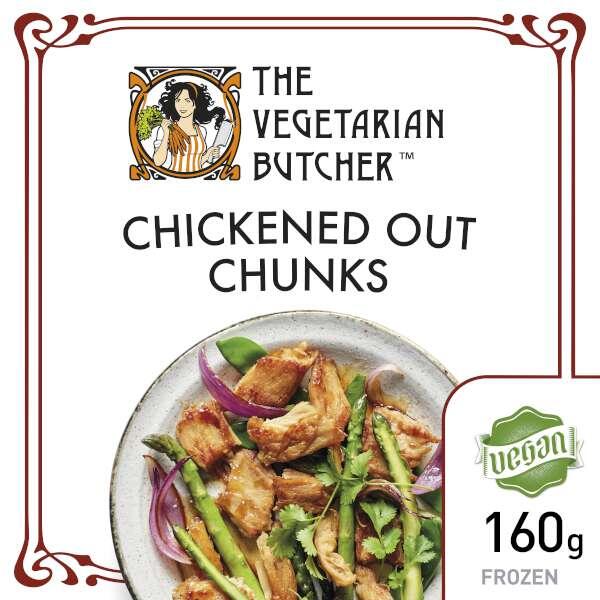


"Vegan Grated Ch<heart emoji><heart emoji>se"
(https://assets.icanet.se/t_product_large_2x_v1,f_auto/731024...)
"Roast Beaf - Plant-based cold cut"
(https://assets.icanet.se/t_product_large_2x_v1,f_auto/735003...)
"Parveggio - grated"
(https://assets.icanet.se/t_product_large_2x_v1,f_auto/529287...)
"Greek style"
(https://assets.icanet.se/t_product_large_2x_v1,f_auto/529287...)
If I were vegan, I'd feel offended.